
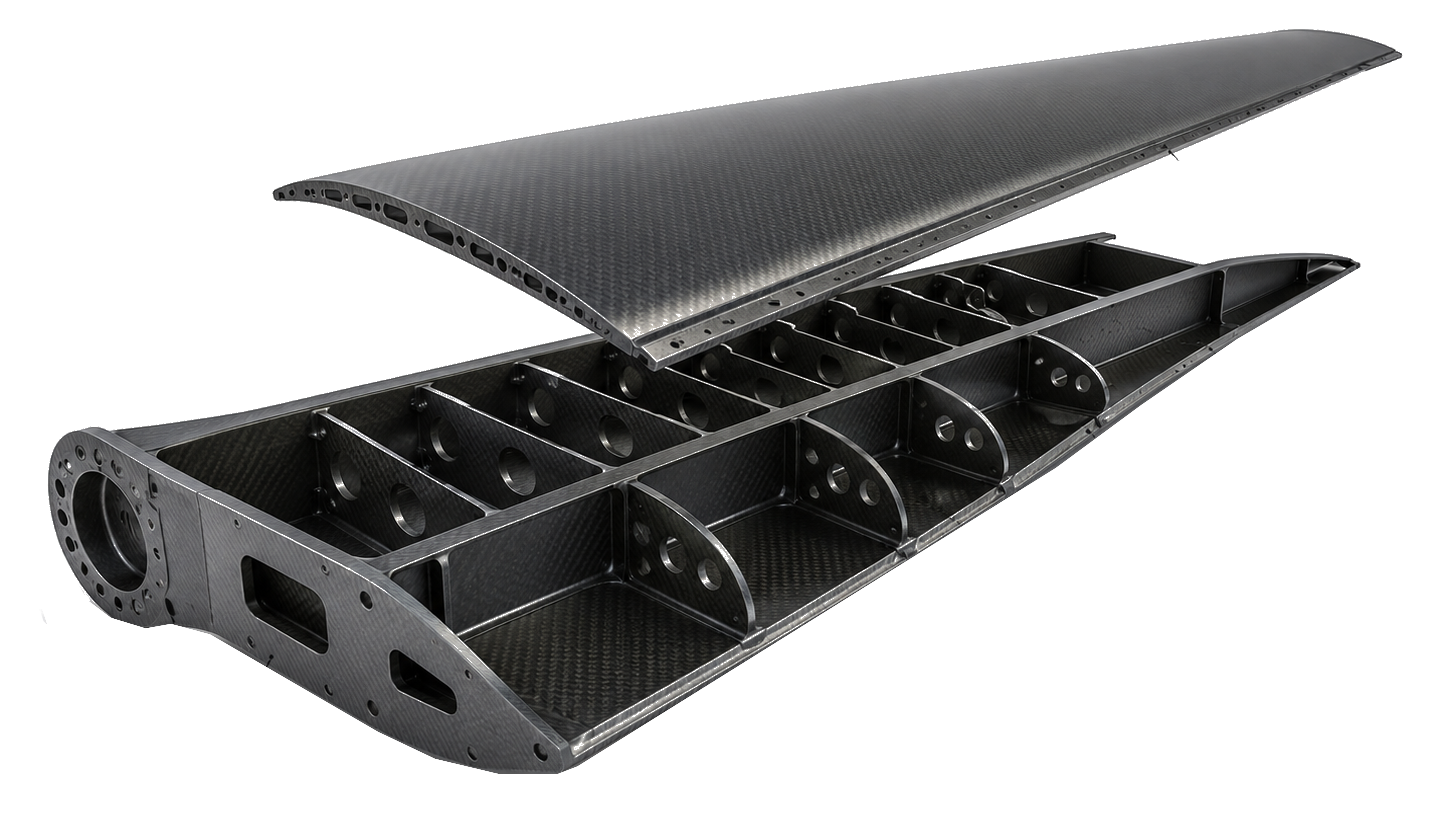
The global aviation industry is undergoing a profound transformation. While aircraft performance and range have been the primary focus in recent years, requirements are increasingly shifting toward industrial scalability and cost efficiency. Modern aviation systems must not only be high-performing and lightweight, but above all economically producible in large volumes. This is currently one of the greatest manufacturing challenges – not least in unmanned aviation.
This transformation pressure is particularly evident in the field of structural composite components. Many existing development and manufacturing approaches originally stem from traditional aerospace applications with comparatively low production volumes. Processes such as autoclave prepreg manufacturing deliver high-performance structures, but they are only partially suitable for the mass production of aircraft and aerospace components in terms of cycle time, degree of automation and production costs.
As the market becomes increasingly industrialized, priorities are therefore changing. The decisive factor is no longer solely the maximum mechanical performance of individual components, but the ability to manufacture composite structures reproducibly, automatically and cost-effectively in large quantities. This is precisely where CIKONI can provide in-depth support.
Automation Is Becoming a Central Factor in Aerospace Production
Industrial aviation requires highly automated production processes. Only through consistent automation can the required future production volumes be realized economically. At the same time, requirements for process stability, quality assurance and manufacturing scalability are increasing.
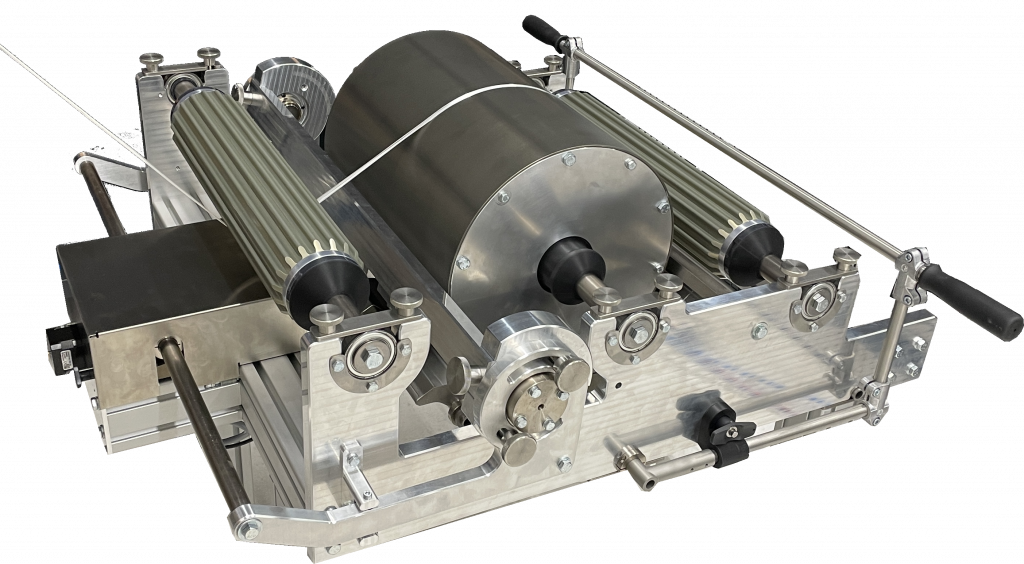
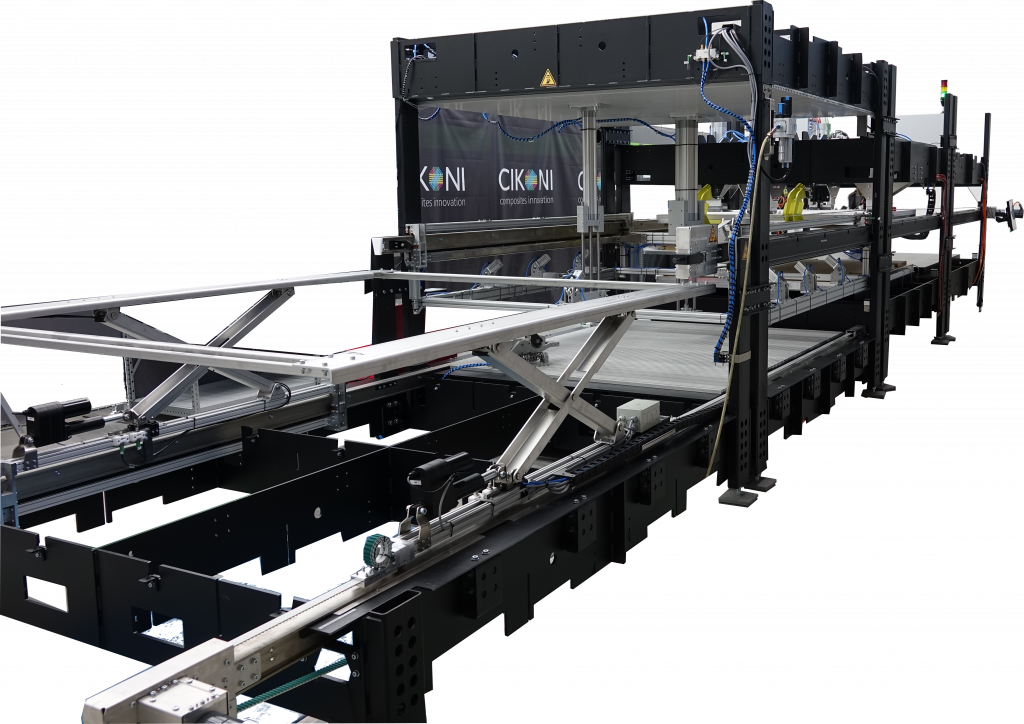
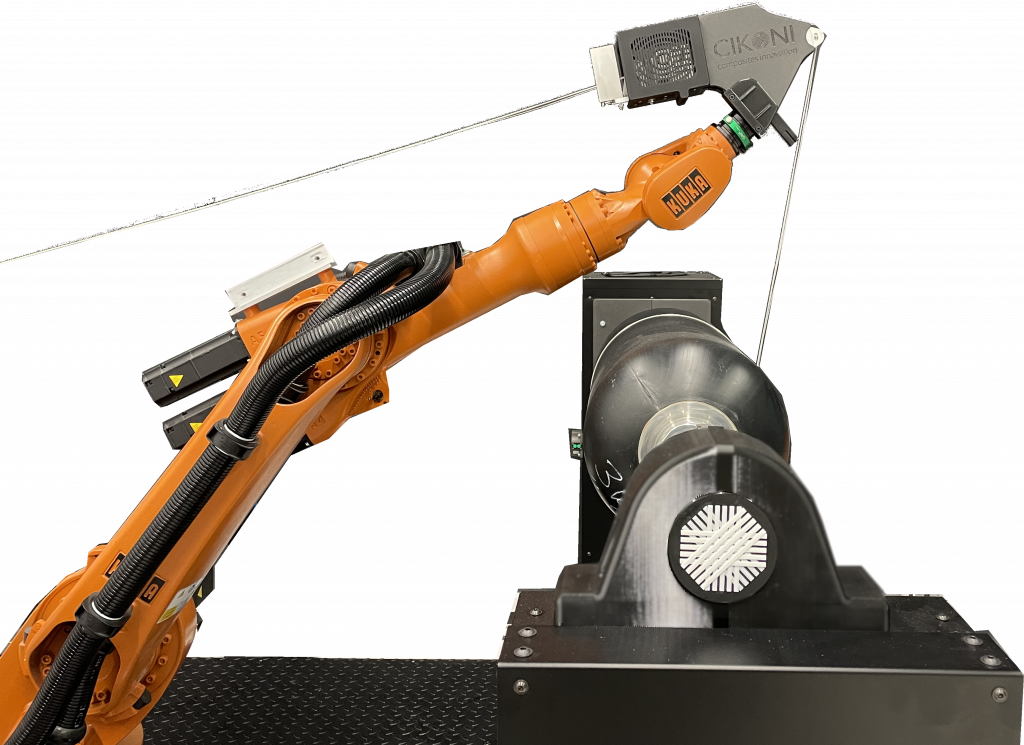
Many of the relevant technologies have already been developed and industrialized in the automotive composites industry over recent years. Particularly in the field of automated composite manufacturing, established technologies now exist that offer enormous potential for the series production of aerospace structures.
A key example is modern RTM process chains. In Resin Transfer Molding, dry fiber preforms are first produced automatically and then injected with resin under high pressure in closed molds. This manufacturing strategy enables high reproducibility, short cycle times and a significantly reduced level of manual labor. Especially for structural components such as frames, housing structures or load-bearing components, RTM technology offers considerable advantages for industrial mass production.
At the same time, Automated Fiber Placement is becoming increasingly important. The automated placement of fiber tapes enables highly differentiated laminate structures that can be specifically adapted to the load paths of the structure. This results in particularly efficient and weight-optimized composite structures. The technology also opens up new possibilities for functionally integrated components and highly automated production workflows. A current trend toward low-cost AFP systems is giving these technologies additional momentum in highly scaled aerospace manufacturing.
Thermoplastic composite architectures are also becoming an increasingly relevant element of modern aerospace manufacturing. In contrast to conventional thermoset systems, the chemical curing of the material is eliminated, removing a major cycle-time bottleneck. This significantly reduces takt time and enables highly automated production processes with substantially higher throughput. Additional potential arises in terms of weldability, repairability, recyclability and elasticity.
The Real Key Lies in Design for Mass Manufacturing
Despite all advances in manufacturing technology, the success of industrial aerospace production is not determined by the process alone. The real key lies in Design for Manufacturing. More precisely, in Design for Mass Manufacturing.
Many current developments fail because existing composite design philosophies are transferred unchanged from metallic aerospace structures. However, designs originally intended for low production volumes and a high proportion of manual manufacturing can only be automated to a very limited extent.
For economical mass production, components must be consistently aligned with the later manufacturing process from the earliest stages of development. Geometries, laminate structures, joining points, material systems and tolerance concepts must be developed together with the underlying production processes.
A striking example of a target vision for aviation is the composite architecture of the BMW i3. The structures used there were not only optimized for RTM production, but were also consistently developed with regard to process integration and industrial scalability. Joining points, for example, were designed directly as tool-finished features in order to reduce downstream machining steps and assembly effort. This is precisely the kind of holistic development approach that will also become decisive in future aerospace manufacturing.
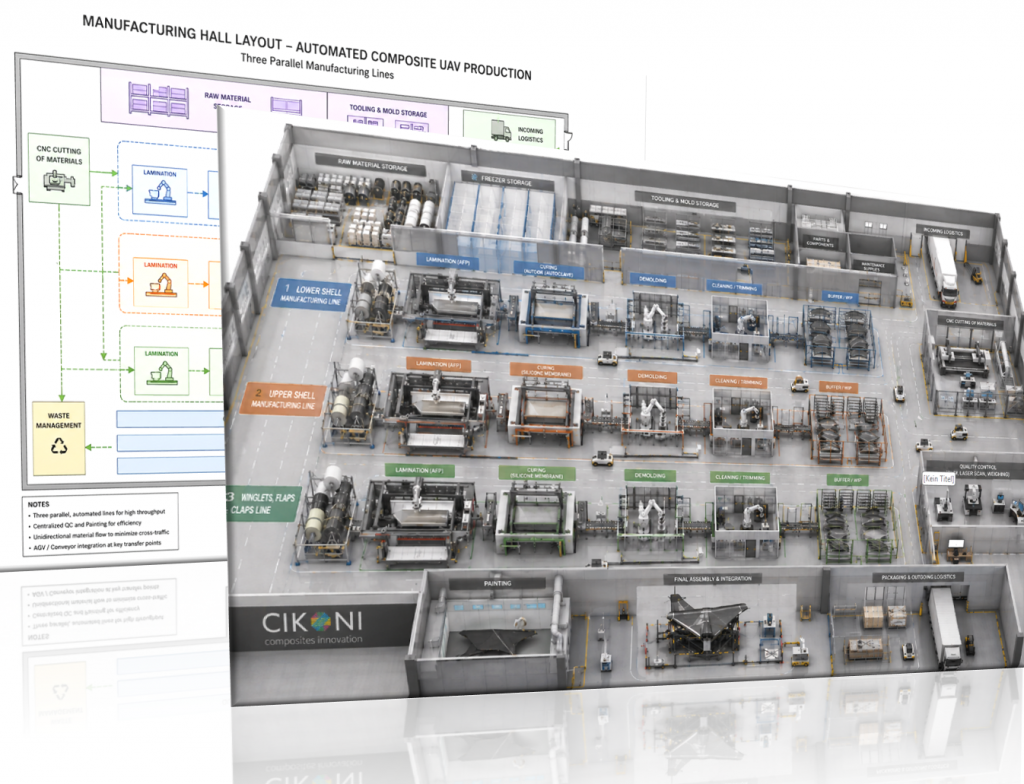
CIKONI develops holistic manufacturing strategies ranging from Design for Manufacturing to complete factory layouts for highly scaled aerospace production.
Industrial Aerospace Manufacturing Requires Interdisciplinary Engineering
The successful implementation of automated composite manufacturing does not result from isolated individual technologies, but from the interaction of a wide range of lightweight engineering disciplines. Design, simulation, material development, manufacturing technology, automation and production planning must be considered in an integrated way from the very beginning.
This is exactly where CIKONI comes in with a holistic consulting and engineering approach.
CIKONI supports companies along the entire industrial value chain of modern composite structures. The range of services extends from early concept development, design, FEM simulation, prototype manufacturing, testing and validation through to the development of innovative manufacturing processes and automated production solutions.
In addition, CIKONI has extensive expertise in process automation, special-purpose machinery and the development of complete production systems. The planning of scalable production systems and complete factory layouts is also part of the service portfolio. As a result, not only high-performance composite components are created, but fully industrializable manufacturing solutions for the mass production of modern aviation systems.
Conclusion: The Future of Aircraft Manufacturing Is Industrialized Composite Production
The next stage of development in the aircraft industry will be determined to a significant extent by industrial manufacturability. Companies that can develop high-performance composite structures for automation while also scaling them from a manufacturing perspective will secure decisive long-term competitive advantages.
Automation, Design for Manufacturing and integrated engineering processes will become central success factors in modern aerospace production.
The industrial mass production of aircraft therefore requires a fundamental shift in thinking: away from traditional aerospace processes and toward fully integrated, automated and scalable composite development and manufacturing strategies. We actively support our customers in this transformation.

